
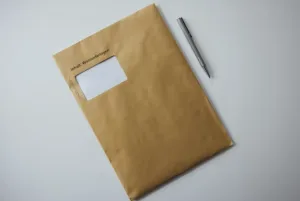
The choice of an appropriate business envelope may seem insignificant; however, it can play a considerable role in how others perceive your correspondence.
Invoices, contracts, promotional items, and other documents should be sent in the appropriate envelope; otherwise, they will either get creased or leave a negative first impression.
Using a business envelope that is not suitable for your documents can lead to unnecessary expenses or, conversely, a loss of money due to an inappropriate size. This is why knowledge of available envelope sizes and their uses can help any business operate effectively.
To keep your correspondence in good condition, to look neat, and to organize the work of your company more efficiently, you need to know the purpose of various business envelope sizes.
Here is how to select the best business envelope size for every document.
1. Understand the Purpose of Your Mailing
The first step in selecting the correct business envelope size is to decide exactly what you want to send. Depending on the document that you wish to mail, certain protection and presentation measures will be necessary.
In addition, consider the level of confidentiality of the material. If you need to send sensitive materials, a security envelope with internal patterns that prevent any information from passing through is appropriate.
On the other hand, invoices and billing documents may be mailed in window envelopes, since the recipient’s address can be seen through the window.
2. Choose Standard Envelopes for Everyday Correspondence
The most pragmatic solution for regular business communication is still the traditional business envelope. They are designed to hold standard-sized letter paper folded in three parts, making them perfect for office use.
These envelopes can be used for writing letters, sending invoices, bills, receipts, statements about payments due, quotations, and any other business communication purposes. They comply with postal regulations, ensuring predictable postage fees and an appropriate appearance.
Apart from that, there are different kinds of seals for traditional business envelopes – they can have a classic gum seal or a self-sealing closure option. Your needs should determine the choice.
3. Select Larger Envelopes for Documents That Should Stay Flat
There are times when folding is not appropriate for certain items. Legal documents, presentation folders, brochures, annual reports, catalogs, certificates, and marketing materials tend to look much more professional when sent in a flat envelope.
For one thing, using a larger envelope would provide enough room to prevent such documents from getting wrinkled. This will help make a good first impression, since the recipient will receive the exact items without having to unfold any papers.
Another advantage of using larger envelopes is that they make it easy to send multiple documents in a single envelope.
4. Consider Window Envelopes for Efficiency
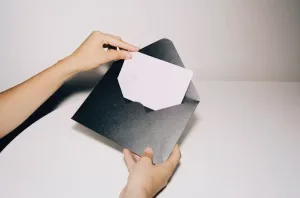
Window envelopes are an ideal choice for organizations that have to mail out recurring bills, statements, or notices. The reason is that, instead of having the recipient’s name printed on the envelope itself, the address is visible through the window of the enclosed document.
Thus, businesses can make their mailing process more convenient, efficient, and cost-effective, as there is no need for labels or direct printing. However, the enclosed documents should be positioned precisely under the window.
5. Think About Document Thickness
The size of the envelope is not decided only by the size of the paper used. Thickness is also an important factor in selecting the envelope.
For example, if one considers a single-page letter, it requires much less space than a proposal with multiple pages and brochures inserted. Even if the page is folded, it may make the mailing thick enough to require a larger envelope.
Using an appropriate, spacious envelope not only adds to the professional look but also helps ensure that the seams do not tear and the contents inside are not damaged.
6. Match Envelope Size to Your Branding Goals
Besides protecting your documents, the business envelope plays an essential role in shaping your professional image. Your documents already make an impression on the recipient before they open your envelope.
Using the appropriate envelope size will make it look neat. On the contrary, large envelopes with just one sheet of paper may appear unprofessional and wasteful, while small envelopes will make important papers look sloppy.
Another way many businesses promote their professional image is by using a customized print of their logo on their envelopes. Not too much should be printed on the envelope; branding could work here.
7. Balance Professional Appearance with Mailing Costs
Using the biggest possible envelope is not always the right choice. On the one hand, larger envelopes will let you fit more in them; on the other hand, they might increase your postal costs.
So, there is a need to find a balance between protecting your documents and saving money. The smallest envelope that will perfectly fit all of your papers should be used.
Over time, such savings will accumulate into considerable sums of money for any company that sends hundreds or even thousands of mailings per month.
8. Pay Attention to Paper Quality and Closure Options
The size of the envelope is just one consideration in ensuring professional business correspondence. Other considerations include the paper type and the closure type used in creating business letters.
Using higher-quality paper means better protection against tears and a better feel. Using thicker paper will also help ensure that your envelope retains its shape even when it contains several pages.
The right closure depends on how you send your mail. For volume mailings, self-closing envelopes save time by eliminating the need to wet them.
Conclusion
The choice of the most effective size for a business envelope goes far beyond choosing an envelope that fits all your documents. One needs to consider the aim of your mailing, the dimensions and thickness of your content, how you wish to present yourself, and your mailing costs.
If all of these aspects come together, you can be sure that your letters will reach their destination in a well-presented and well-protected form. No matter whether you mail routine business letters, legal documents, financial reports, or marketing materials, choosing the right envelope shows attentiveness that your recipient will notice.
Sometimes even minor changes in how you select an envelope will make your office work easier and help you build a more positive image.